The Interplay Between Reel Symbol Frequencies and Tiered Reward Unlocks in Digital Gaming Apps
Mara Wagner · Jun 29, 2026
The Interplay Between Reel Symbol Frequencies and Tiered Reward Unlocks in Digital Gaming Apps
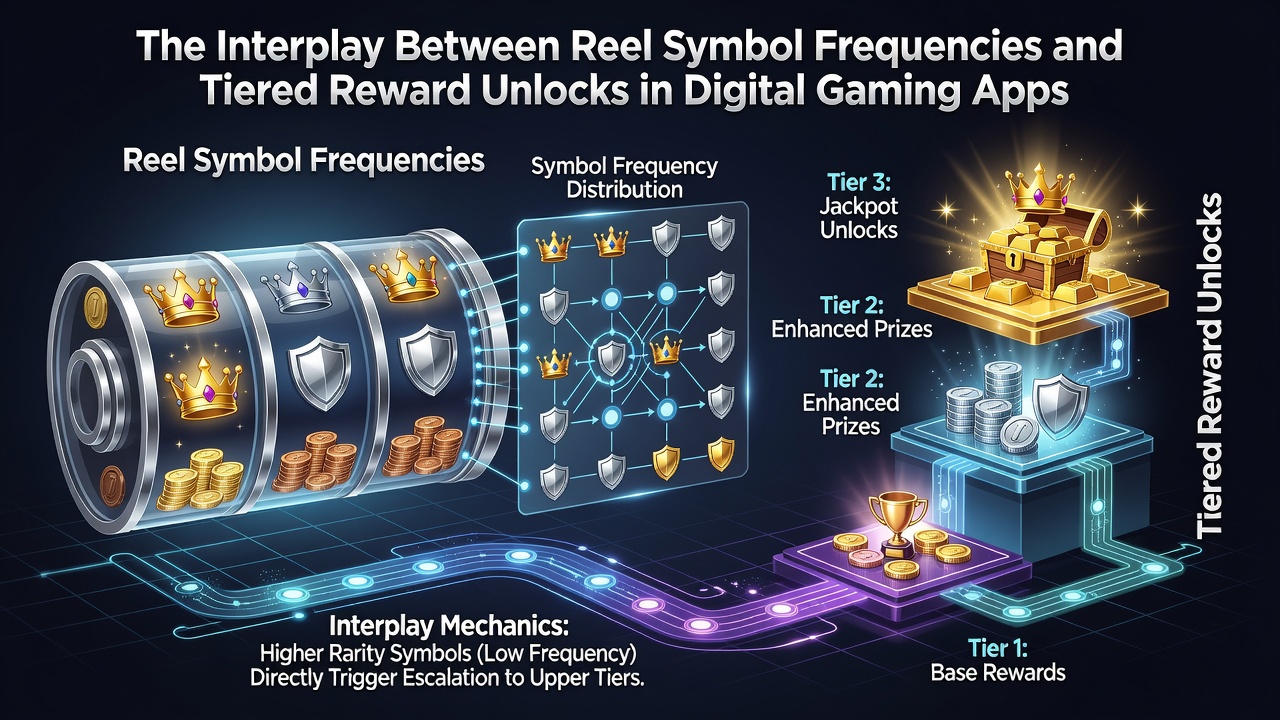
Digital gaming apps rely on carefully calibrated reel mechanics where symbol frequencies determine how often certain combinations appear during play sessions. These frequencies interact directly with tiered reward systems that grant escalating benefits as players accumulate wins or complete objectives. Operators program reels with weighted distributions so common symbols fill most positions while premium icons occupy fewer stops, which creates predictable patterns for base game progression and rarer triggers for higher reward tiers. Reel construction begins with random number generators that map to physical or virtual stops on each reel. Low-value symbols such as basic fruits or card ranks receive higher hit rates, often between 15 and 25 percent per reel depending on the title, whereas scatter or bonus symbols appear at rates below 5 percent. This weighting ensures steady small returns that feed into daily login rewards or level-up mechanics while reserving major unlocks for infrequent events. Tiered systems then convert these outcomes into cumulative progress, where reaching a new tier requires a set number of qualifying spins or coin collections that themselves depend on the underlying symbol probabilities. Studies conducted by academic researchers at the University of Nevada Reno have examined how these mechanics align across hundreds of mobile titles released between 2023 and 2025. Data collected from anonymized session logs showed that apps adjusting low-symbol frequencies upward by even two percentage points recorded faster advancement through the first three reward tiers, while premium symbol rates remained unchanged. The same analysis indicated that players who reached tier four or higher within the first week tended to encounter at least one high-frequency combination every 12 to 18 spins on average.Mechanics of Symbol Weighting and Reward Progression
Each reel in a typical five-reel app contains between 20 and 50 virtual stops, and developers assign multiple instances of the same symbol to different stops to achieve desired frequencies. A wild symbol might occupy three stops on reel three yet only one stop on reel one, producing an overall appearance rate calculated through combinatorial mathematics rather than simple division. When these weighted reels feed into tiered unlock tables, the probability of hitting the required combination for tier advancement becomes a product of individual reel probabilities, adjusted for any cascading or expanding features present in the game rules.
App developers publish return-to-player percentages that already incorporate these frequency models, yet tiered rewards often operate on separate internal counters that track player-specific milestones. One common structure awards free spins after 50 base game wins, where wins are defined as any three-or-more matching symbols on a payline. Because low-tier symbols appear more often, the majority of these milestones complete through frequent small combinations, whereas entry into later tiers may require landing a designated bonus symbol combination that occurs far less regularly.
Regional Regulatory Influences on Frequency Design
Regulatory frameworks in different jurisdictions shape how frequencies can be disclosed or modified. The Nevada Gaming Control Board requires operators to maintain detailed records of reel strip configurations for any app distributed to state residents, and similar documentation standards exist under iGaming Ontario guidelines for Canadian platforms. These records allow auditors to verify that advertised tier unlock rates match actual symbol probabilities over large sample sizes.
Market data released in June 2026 by the Australian Communications and Media Authority highlighted continued growth in mobile reel app usage, with total session counts rising 11 percent year-over-year. The report noted that titles employing dynamic frequency adjustments tied to player tier status maintained higher average session lengths compared with static configurations, although the authority did not release individual game-level statistics.
Case Examples from Live App Ecosystems
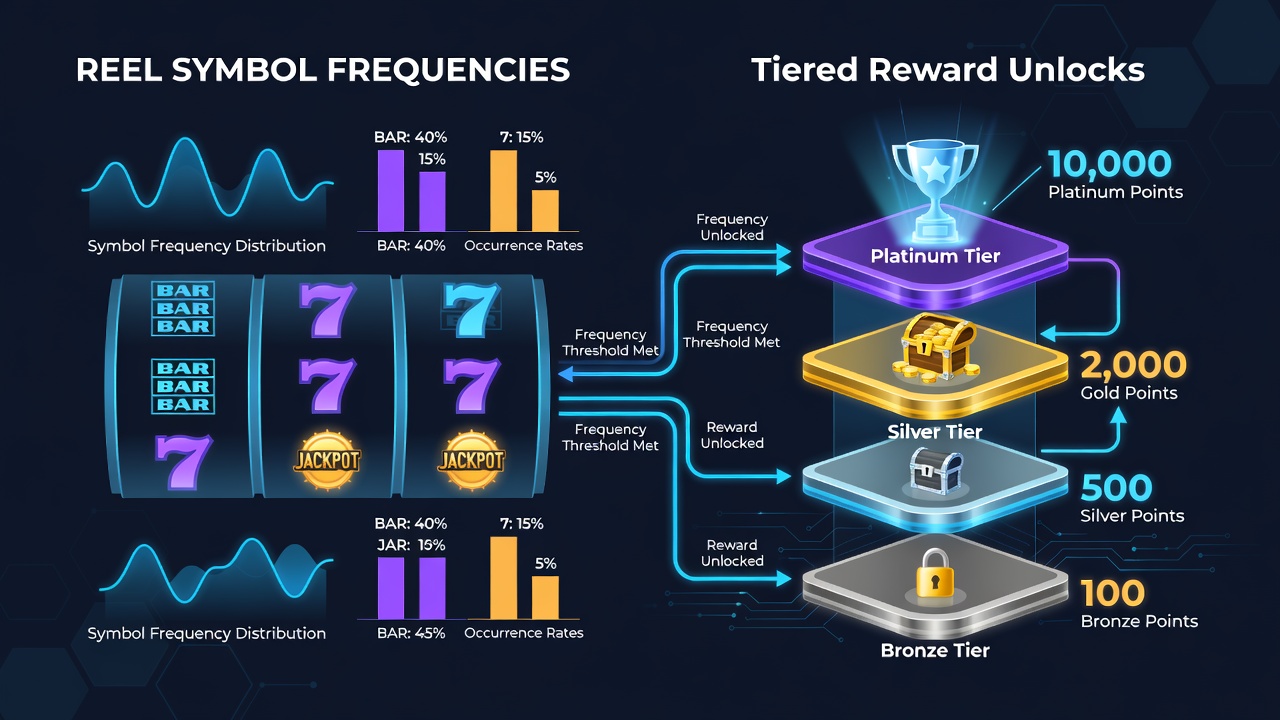
Observers tracking popular reel titles have documented several consistent patterns. In one widely distributed app, the base symbol frequency for three-of-a-kind wins sits at approximately 18 percent per spin, enabling rapid completion of the initial reward tier within 30 to 40 spins for most users. Advancement to tier three, however, incorporates a secondary requirement of collecting 15 premium symbols, which appear at a combined frequency of roughly 3.2 percent across the five reels. This dual-condition structure stretches the time between tier jumps while still delivering incremental progress through everyday play.
Another title released in early 2025 uses expanding wilds that increase the effective frequency of winning combinations once a player enters tier two. The expansion mechanic effectively multiplies the base hit rate by 1.4 times on affected reels, shortening the average spins needed to reach tier four. Developers balance this acceleration by lowering the native frequency of the wild symbol itself to 2.8 percent, preserving overall mathematical integrity across the full reward ladder.
Technical Implementation and Testing Protocols
Quality assurance teams run millions of simulated spins during certification to confirm that observed frequencies align with design targets within a 0.1 percent margin. Automated scripts log every symbol landing, calculate empirical probabilities, and compare them against theoretical values derived from the reel strip arrays. Discrepancies trigger adjustments to stop counts or reweighting algorithms before the app receives final approval for distribution.
Live monitoring continues after launch. Operators track real-time hit rates segmented by player tier and geographic region, then apply minor patches when deviations exceed internal thresholds. Such patches might involve redistributing a single stop on one reel or altering the weighting table for a specific bonus symbol without changing the overall return-to-player percentage.
Conclusion
The relationship between reel symbol frequencies and tiered reward unlocks rests on precise mathematical calibration that governs both short-term engagement loops and longer progression arcs. Frequency tables determine how quickly players accumulate qualifying events, while tier structures convert those events into escalating incentives. Regulatory documentation requirements and ongoing certification testing ensure transparency in these calculations, and market reports continue to track aggregate outcomes across jurisdictions. As digital gaming apps evolve, the core interplay between symbol distribution and reward layering remains a central design element shaping session behavior and milestone achievement.