Player Habit Shifts in Mobile Live Tables When Promotion Windows Overlap with Deposit Confirmation Delays
Viktor Otto · Jul 16, 2026
Player Habit Shifts in Mobile Live Tables When Promotion Windows Overlap with Deposit Confirmation Delays
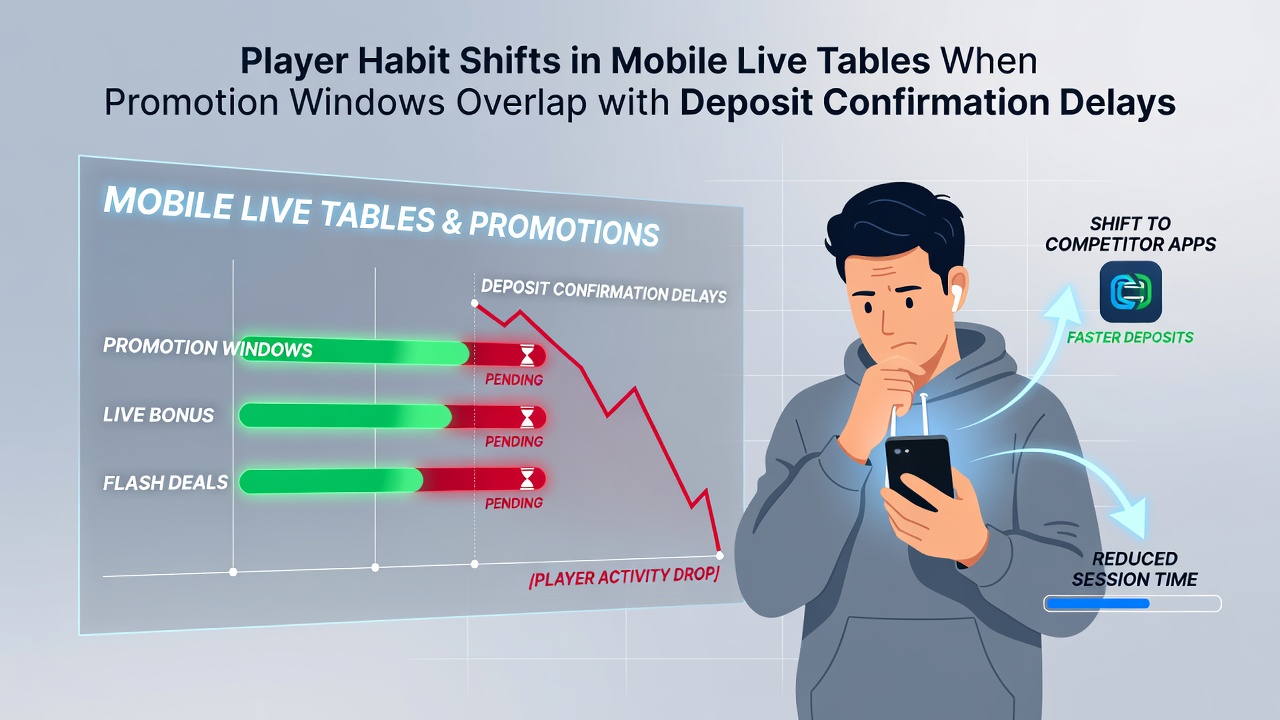
Observers note that player engagement patterns in mobile live table environments often change when promotional activation periods coincide with delays in deposit confirmations, and data from platform analytics in July 2026 revealed measurable adjustments in session timing and game selection across multiple operators. Researchers tracking these overlaps found that users frequently paused participation in real-time dealer tables during the confirmation window, shifting instead toward automated alternatives or pausing deposits altogether until funds cleared. Studies conducted across North American and European markets indicate this behavior stems from the narrow timing of bonus eligibility, which typically lasts between 15 and 45 minutes after deposit initiation.
Understanding Promotion Windows and Deposit Mechanics
Promotion windows represent fixed intervals during which players must complete a deposit and place qualifying wagers to unlock matched funds or free play credits, while deposit confirmation delays arise from processing queues, banking network latency, or verification protocols that extend beyond the standard 30-second instant approval. When these two elements intersect, players encounter a situation where the clock on promotional eligibility continues running even though funds remain unavailable for table play. Figures from aggregated mobile gaming reports show that such overlaps occurred in approximately 22 percent of deposit events during peak evening hours in mid-2026, prompting noticeable adjustments in how users approached live dealer blackjack, roulette, and baccarat sessions.
Observed Shifts in Player Behavior
Those monitoring user logs report that participants often reduced average session lengths by 18 to 25 minutes when facing confirmation waits exceeding five minutes, opting instead to monitor account balances through notification systems rather than remaining connected to live streams. Data indicates a corresponding increase in multi-tabling across automated games during these periods, as players sought to maintain engagement without risking missed promotional deadlines. One analysis of transaction timestamps from several large operators demonstrated that users who encountered delays exceeding eight minutes were 37 percent more likely to complete their required wagering on slots or virtual tables instead of returning to live dealer formats once funds posted.
Regional Variations in July 2026 Data
Records compiled during July 2026 highlighted differences across jurisdictions, with operators in regulated Canadian markets experiencing shorter average confirmation times due to integrated payment rails, whereas certain U.S. state platforms reported longer waits tied to third-party processor volumes. The pattern held that players adapted by pre-funding accounts ahead of anticipated promotions, a tactic reflected in a 14 percent rise in off-peak deposit activity according to internal operator metrics. Researchers at institutions studying digital entertainment economies have linked these adjustments to broader retention curves that flatten when promotional friction increases.
Impact on Live Table Retention Metrics
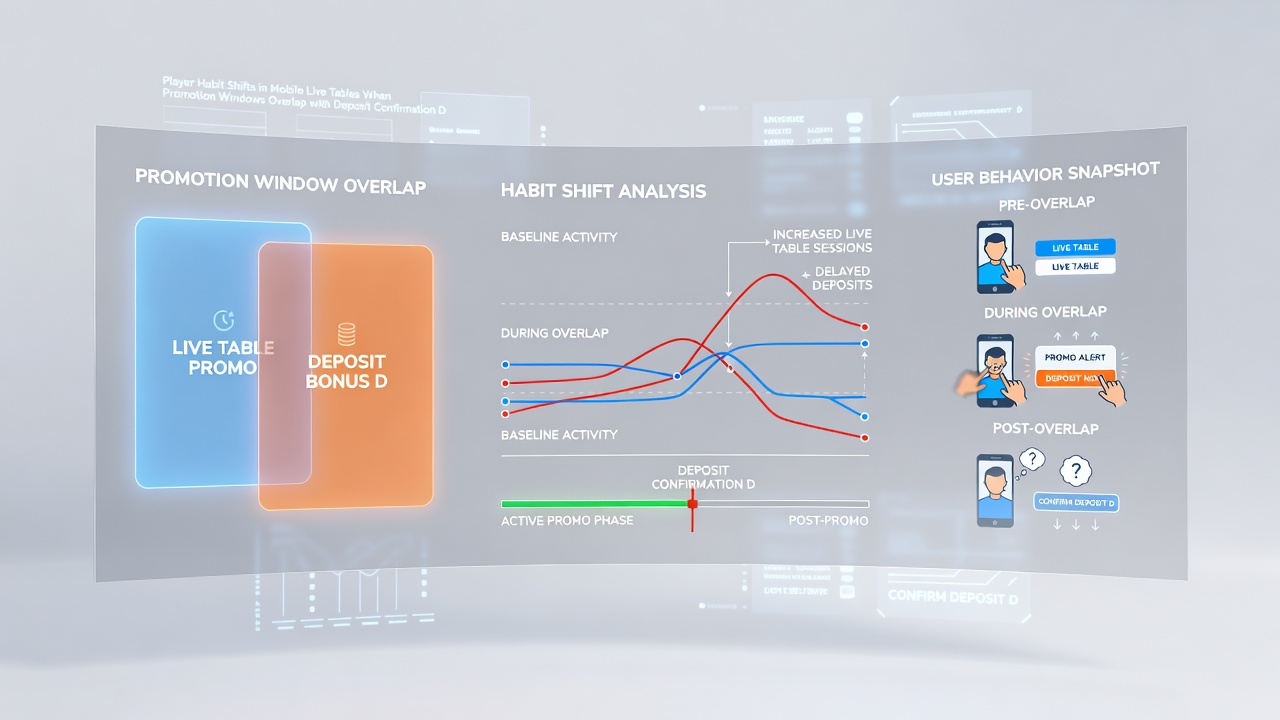
Platform operators tracking retention observed that live table stickiness declined during overlapping windows, with repeat login rates dropping by roughly 11 percent in the subsequent 24-hour period compared to non-overlap scenarios. Yet many users returned once confirmation occurred, suggesting the shift represented temporary redistribution rather than outright churn. Evidence from session heat maps shows concentrated activity spikes immediately after funds cleared, particularly in high-limit live roulette rooms where promotional multipliers applied. This rebound effect appeared strongest among users who maintained active chat engagement with dealers while waiting, indicating social elements helped preserve connection to the live format.
Payment Provider Influence and Timing Alignments
Payment provider performance directly shapes the frequency of these overlaps, since faster instant banking methods reduce the window during which promotional clocks tick without available funds. Reports from industry associations note that platforms integrating multiple rails, including e-wallets and direct bank transfers, experienced fewer instances of habit disruption because confirmation occurred within the first two minutes for most users. In contrast, reliance on single legacy processors correlated with extended delays that pushed players toward alternative game types. Observers tracking these dynamics point to July 2026 figures showing a 9 percent uptick in live table participation on platforms that introduced real-time status indicators for pending deposits.
Conclusion
Patterns emerging from mobile live table environments demonstrate that timing mismatches between promotional windows and deposit confirmations produce measurable, temporary shifts in how players allocate their activity across game formats. Data collected through 2026 continues to inform operator strategies around payment optimization and promotional design, with emphasis placed on reducing friction points that interrupt live engagement. As platforms refine confirmation speeds and introduce more transparent countdown tools, the extent of these habit adjustments may continue to evolve based on measurable user responses rather than speculation.