Macau Finance Secretary Tai Kin Ip Resigns for Personal Reasons, Effective Immediately
Viktor Otto · Apr 16, 2026

Macau Finance Secretary Tai Kin Ip Resigns for Personal Reasons, Effective Immediately
The Sudden Departure in Macau's Leadership
On April 16, 2026, Tai Kin Ip stepped down as Macau's Secretary for Economy and Finance, citing personal reasons; the move, proposed by Chief Executive Sam Hou Fai, received swift approval from China's State Council and took effect immediately in the special administrative region known globally as the world's largest gambling hub. Observers note how such high-level changes in Macau often ripple through its tightly regulated economy, especially given Beijing's oversight role in key appointments. According to Reuters, the resignation caught many by surprise, coming just as the city navigated ongoing economic strategies tied to its dominant industry.
Macau, with its neon-lit resorts and massive gaming floors, relies heavily on gambling revenue that dwarfs Las Vegas; figures from recent years show gross gaming revenue surpassing $30 billion annually under the watch of officials like Ip, who shaped policies for this sector since taking office in late 2024. And while the official statement points to personal matters, those familiar with the region's politics highlight how leadership transitions here demand national-level sign-off, underscoring the unique governance model blending local autonomy with central authority.
Tai Kin Ip's Role Overseeing the $30 Billion Gambling Empire
Tai Kin Ip assumed the Secretary for Economy and Finance position in late 2024, stepping into a role that placed him at the helm of Macau's economic engine; he directly oversaw the city's sprawling $30 billion gambling industry, home to six major concessionaires including Sands China, Wynn Macau, MGM China, SJM Holdings, Melco Resorts, and Galaxy Entertainment. These operators, bound by 10-year licenses renewed in 2022, generate the bulk of Macau's fiscal inflows through table games, slots, and increasingly diverse non-gaming amenities like entertainment venues and conventions.
During his tenure, which spanned roughly 18 months, Ip managed regulatory frameworks amid a post-pandemic recovery; data from the Gaming Inspection and Coordination Bureau (DICJ)—Macau's gaming regulator—reveals steady upticks in visitor numbers and revenue, with mainland Chinese tourists driving much of the growth under strict cross-border controls. Experts who've tracked these trends point out how secretaries in this post balance promoting tourism diversification while ensuring compliance with Beijing's anti-money laundering directives and social responsibility mandates.
Take Sands China, for instance, which operates iconic properties like The Venetian; under Ip's oversight, such firms expanded integrated resort offerings, blending casinos with shopping arcades, theaters, and hotels to meet government quotas for non-gaming revenue that now accounts for significant portions of operations. Wynn Macau, MGM China, and others followed suit, adapting to policies that Ip helped enforce, including adjustments to gaming taxes and VIP room regulations that had reshaped high-roller play since 2016 reforms.
Interim Arrangements and the Path Forward
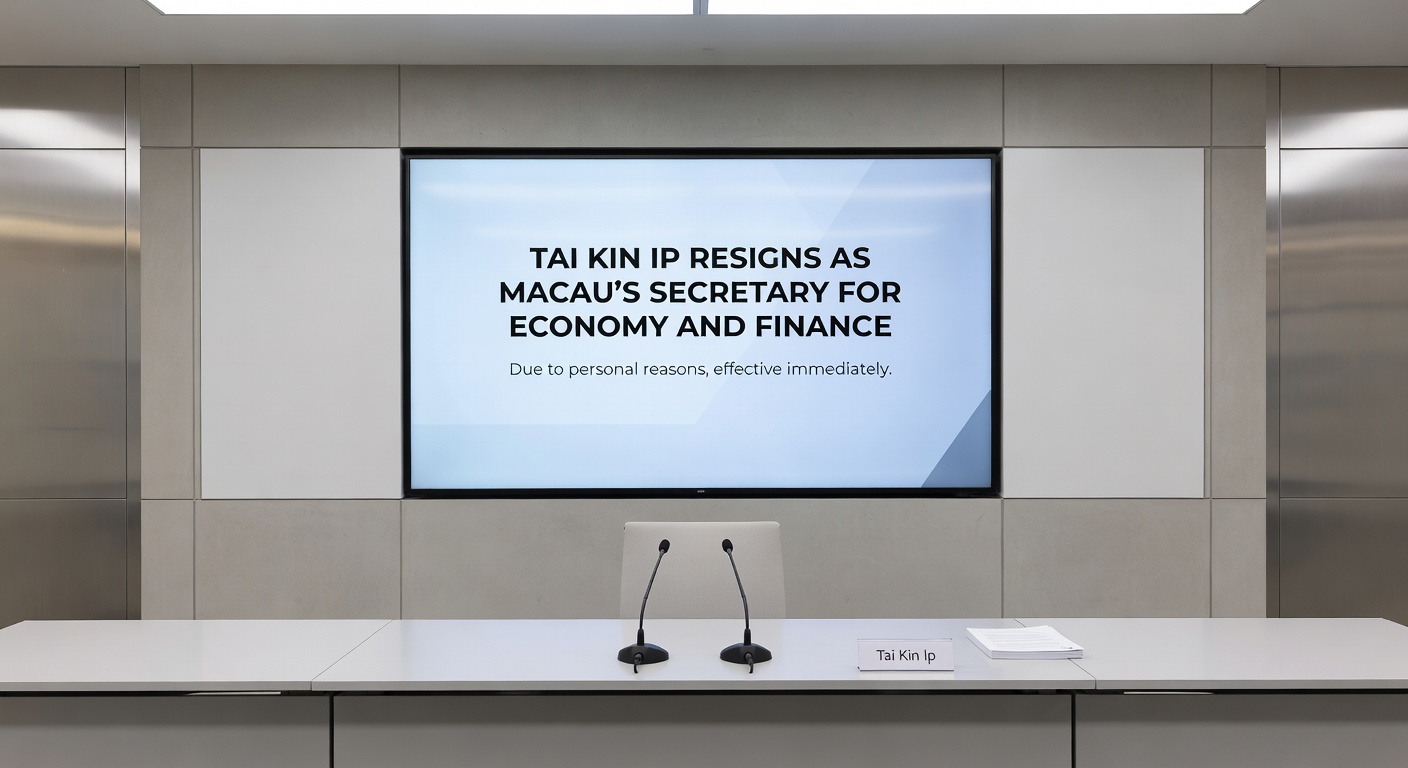
With Ip's departure effective right away, Chief Executive Sam Hou Fai has taken on the duties of Secretary for Economy and Finance on an interim basis; authorities now prepare to nominate a successor, a process that will again require China's State Council approval, mirroring the structured protocol for top Macau posts. Sam Hou Fai, who assumed the chief executive role in December 2024, brings his own background in judicial affairs to this temporary economic helm, a shift that those monitoring the scene say tests the government's agility in a revenue-dependent hub.
What's interesting here is how seamlessly these handovers occur; past transitions, like those during the 2022 license renewals, saw similar interim setups ensuring no policy vacuums, particularly as Macau eyes ambitious targets for 2026 gaming revenue projected to climb further. And while personal reasons remain the stated cause—no scandals or controversies mentioned—observers recall that Macau officials often cite such factors in resignations, allowing focus to stay on continuity rather than disruption.
Context of Macau's Unique Economic Position
Macau stands out not just for its scale but for its monopoly status as China's sole legal gambling destination; this setup, formalized since the 2001 liberalization from a single operator, fueled explosive growth, turning a former Portuguese enclave into an economic juggernaut where gaming taxes fund over 70% of public budgets. Ip's portfolio extended beyond casinos to finance, trade, and tourism, sectors intertwined in a city where Cotai Strip mega-resorts dominate the horizon.
Galaxy Entertainment, for example, with its StarWorld and Broadway properties, exemplifies the blend of mass-market gaming and family entertainment that Ip's policies supported; Melco Resorts, operator of City of Dreams, pushed digital innovations like cashless wagering under his watch, aligning with broader tech integrations across the industry. SJM Holdings, the legacy player rooted in Stanley Ho's empire, navigated legacy VIP shifts, while MGM China and Wynn emphasized luxury amid evolving consumer tastes from younger demographics.
But here's the thing: Beijing's influence looms large, with the State Council's nod required for roles like Ip's, reflecting Macau's "one country, two systems" framework that balances local decisions against national priorities. Studies from institutions like the International Gaming Institute at UNLV in the US highlight how such dynamics foster stability, even in abrupt changes, as seen in revenue records unbroken despite leadership flux.
People who've studied Macau's model often discover parallels to other regulated markets; Nevada's gaming board, for instance, tracks similar oversight patterns, though Macau's scale—handling more annualized bets than the entire US—sets it apart, a fact Ip grappled with during global economic headwinds like inflation and travel curbs.
Key Operators Under Ip's Oversight: A Closer Look
Sands China led in market share through much of Ip's term, its Marina Bay Sands-style complexes drawing crowds; Wynn Macau, famed for lavish designs, reported steady performances, buoyed by policies stabilizing junket operations post-2021 crackdowns. MGM China focused on sustainability initiatives, SJM Holdings on digital transformation, Melco on entertainment diversification, and Galaxy on regional expansion—each navigating the $30 billion ecosystem Ip supervised.
Turns out, this interconnected web means even short tenures like Ip's leave imprints; DICJ data shows compliance rates holding firm, with operators investing billions in non-gaming to hit mandated ratios, a push that gained momentum under his leadership. And now, as Sam Hou Fai steps in, the sector watches for signals on license extensions looming beyond 2032, tax tweaks, or tourism boosts tied to Greater Bay Area integration.
It's noteworthy that Macau's gambling hub status persists despite challenges; visitor arrivals rebounded to pre-COVID levels by early 2026, per government tallies, with Ip's era coinciding with loosened visa policies for select regions, fueling the operators' floors.
Navigating Leadership Changes in a High-Stakes Environment
Resignations at this level aren't everyday occurrences, yet Macau's system handles them methodically; the chief executive's proposal to Beijing, followed by immediate implementation, keeps momentum going, as evidenced here with no reported delays in daily operations. Those who've followed similar shifts—like the 2024 executive transition—know that interim periods often prioritize stability, buying time for vetting replacements attuned to both local needs and central directives.
So, while Ip's personal reasons close one chapter, the nomination process ahead promises another; authorities emphasize preparedness, signaling no intent to let economic stewardship falter in a city where every policy tweak can sway billions.
Conclusion
Tai Kin Ip's resignation on April 16, 2026, marks a pivotal moment for Macau's economy and finance leadership, approved promptly by China's State Council at Chief Executive Sam Hou Fai's proposal and effective without delay. Having guided the $30 billion gambling sector—encompassing giants like Sands China, Wynn Macau, and others—since late 2024, Ip exits amid personal circumstances, leaving Sam Hou Fai to manage interim duties while a successor search unfolds. Observers see this as business as usual in Macau's calibrated governance, where Beijing's role ensures continuity for the world's premier gaming hub; the path forward hinges on swift replacement approval, sustaining the industry's vital pulse.